Zaventem, Belgium - 14 April 2026
-
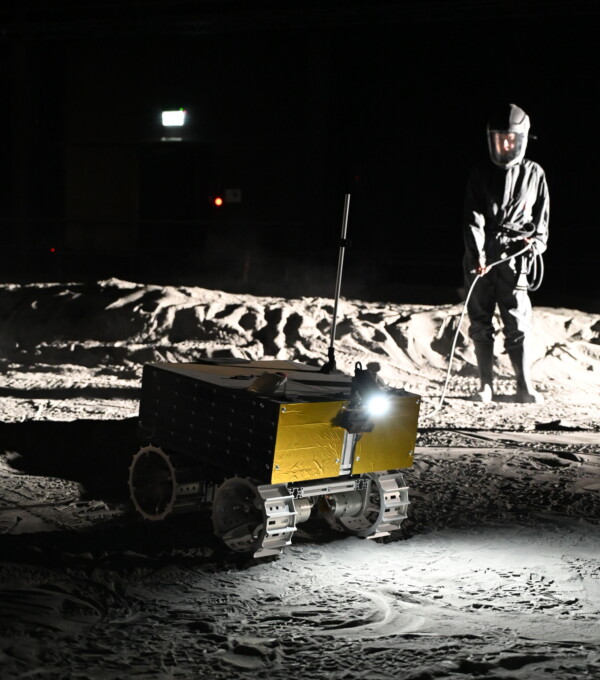
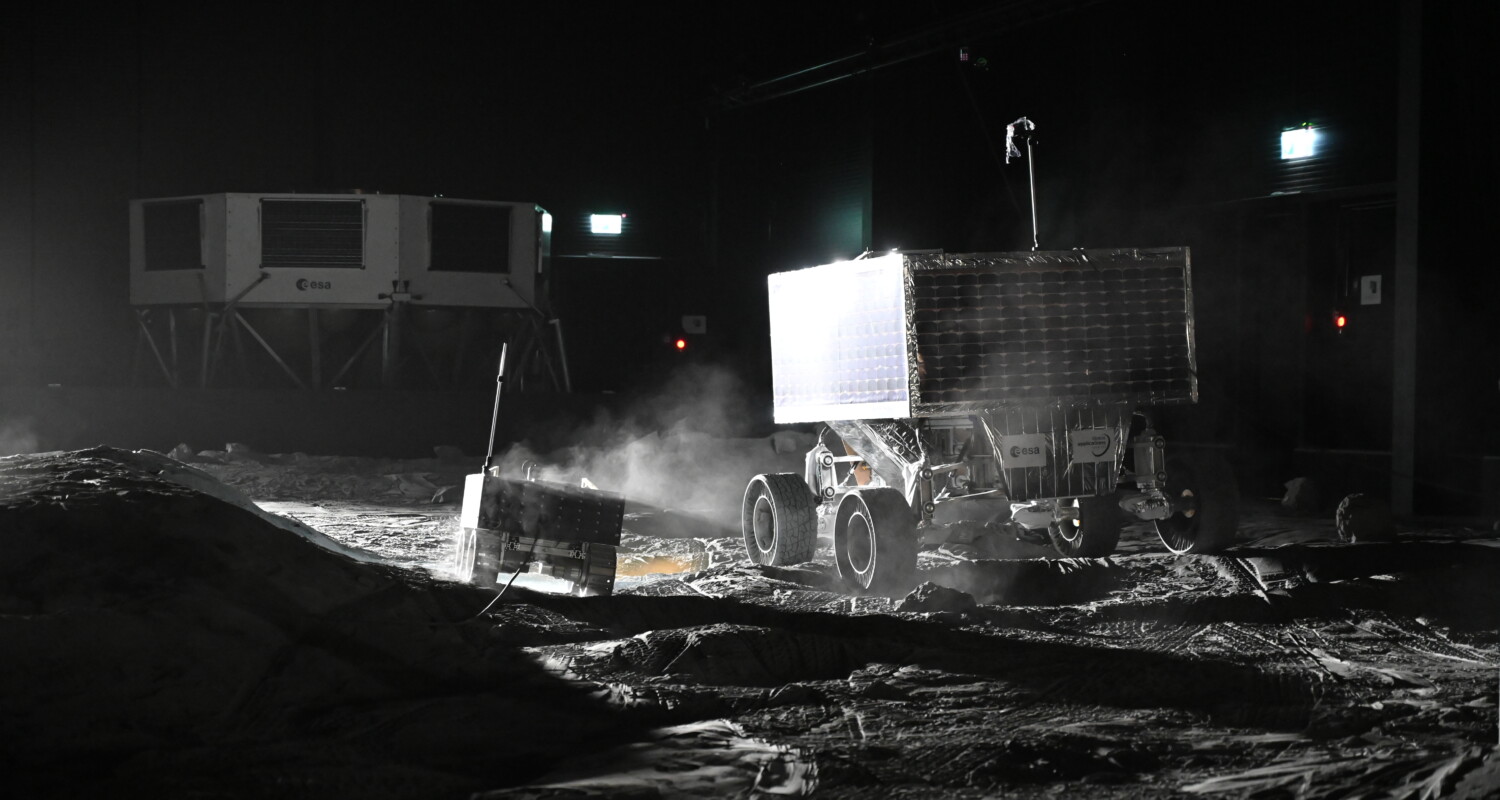
Our rover systems have successfully completed a comprehensive test campaign in a high‑fidelity lunar analogue environment in Cologne, Germany. The tests represent a significant milestone in the maturation of lunar mobility and navigation capabilities and support the ongoing development of future lunar exploration missions.
The campaign focused primarily on validating rover mobility and navigation performance on terrain representative of lunar surface conditions. Operating in a controlled but realistic environment, the rovers were driven across simulated regolith and complex terrain to assess traction, stability, path‑planning and localisation behaviour. These tests were designed to evaluate how the systems perform under operationally relevant constraints and to verify key design assumptions.
In addition to testing systems related to the LUVMI‑M mission, planned for launch at the end of 2028, the campaign also included mobility and navigation tests for LPSR, a larger rover developed within the framework of an ESA project. This enabled the team to exercise different rover architectures and operational concepts within the same lunar analogue environment.
“The primary objective of this campaign was to demonstrate reliable mobility and navigation in conditions that closely resemble those expected on the Moon,” said Simon Vanden Bussche, Project manager & System Engineer. “We deliberately pushed the systems beyond nominal scenarios to observe behaviour, validate performance margins and identify areas for improvement. The data collected is essential for increasing robustness and reducing risk as we move towards flight‑ready designs.”
-
Beyond nominal driving operations, the tests provided insights into integrated system behaviour, including the interaction between software, sensors and mechanical subsystems. The results will directly inform design refinements and future test campaigns, contributing to the overall readiness of the rover platforms.
The successful execution of the campaign reflects the expertise and commitment of the engineering team, from preparation and integration through to on‑site operations. Each test campaign brings the organisation closer to delivering reliable robotic systems capable of supporting scientific and exploration activities on the lunar surface.
As international efforts accelerate towards a sustained human and robotic presence on the Moon, proven mobility and navigation capabilities will be essential. This test campaign represents another concrete step towards enabling long‑term lunar exploration.