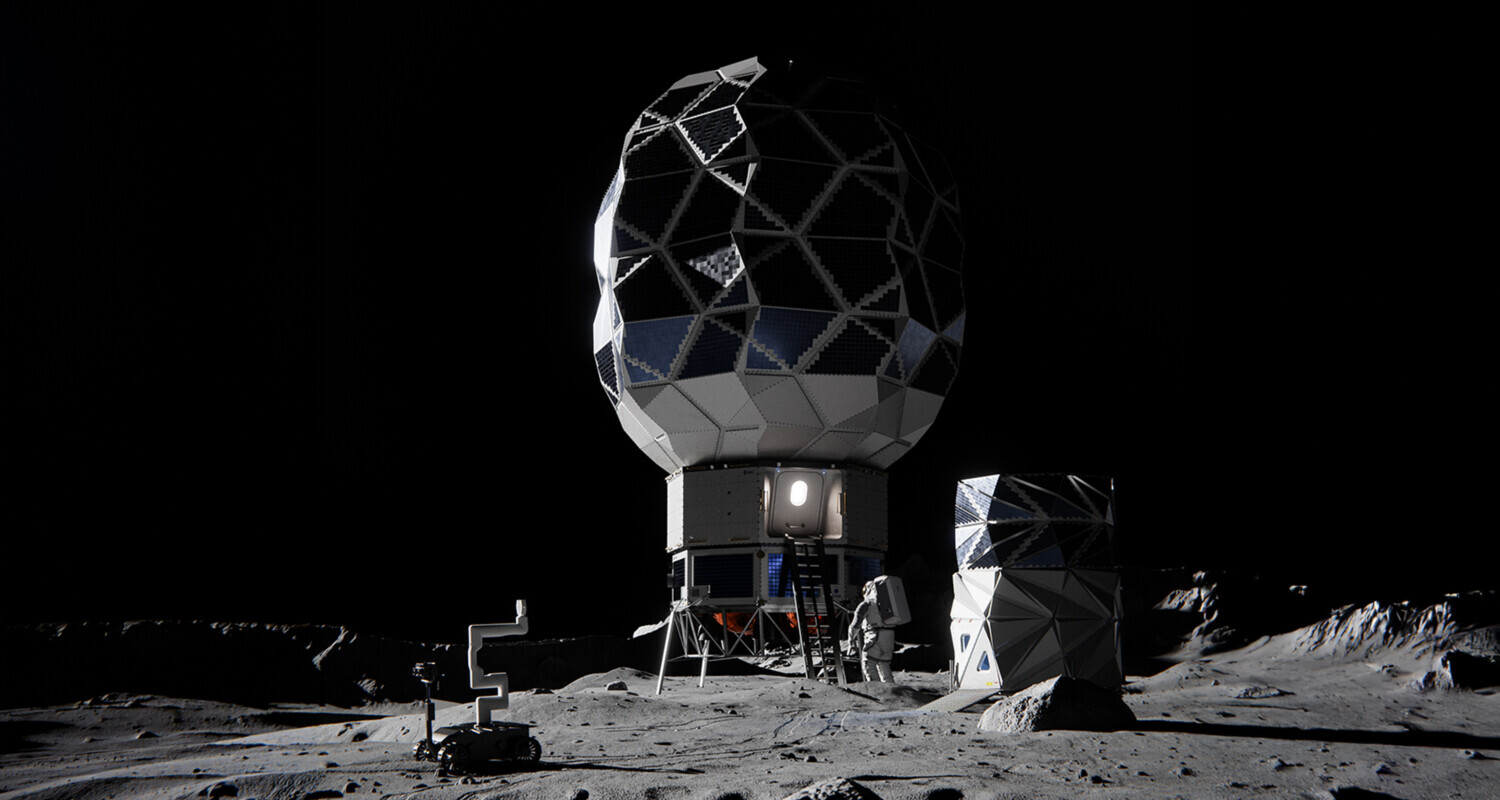
To support ESA’s lunar surface operations, the consortium will deliver a concept study defining a robotic-first surface shelter which could later be adapted to support short-duration crew use. The study will develop a deployable shelter approach intended to protect surface equipment and extend robotic mission capabilities in the challenging lunar environment.
The project focuses on a deployable shelter concept that protects lunar equipment from key hazards such as extreme temperature swings, abrasive dust, radiation, and micrometeoroids. It is designed as a protected service hub for robotic operations to store equipment and spares, keep hardware within safe temperature limits, and provide basic infrastructure functions such as power distribution, data links, and local communications support.
About SAGA Space Architects
Founded in 2018, SAGA Space Architects has established themselves among known players in the space industry by using the space and architecture expertise for designing analog space habitats. This research further builds on SAGA’s LUNARK mission, during which SAGA’s Co-Founders field-tested the deployable habitat prototype in Greenland for 100 days. The operational learnings and datasets from LUNARK will provide practical input to the Lunar Remote Camp Study, setting base for deployment and operational considerations, which is a monumental milestone for SAGA Space Architects.
“We have been thinking of how humans will thrive on the Moon since SAGA was founded. The Lunar Remote Camp Study is an exciting opportunity to channel our ambitions and learnings from the past 7 years in collaboration with the talented engineers across our team and consortium partners” – Simon Kristensen, Co-Founder & CTO
About The Exploration Company
Founded in 2021, The Exploration Company (TEC) develops, manufactures, and operates modular, reusable spacecraft to make space logistics more accessible, sustainable, and cooperative. The flagship Nyx spacecraft family is designed for cargo missions to low Earth orbit and the lunar vicinity, with a long term roadmap toward human-rated missions. TEC’s centres of excellence include Bordeaux (systems, propulsion, thermal protection), Munich (avionics, software, GNC, integration), and Turin (mechanisms, robotics, backup mission control), complemented by operations in Houston US, expansion sites for lunar programs in the UAE and cryogenic capabilities in Luxembourg. TEC has been the fastest-growing space tech company in Europe in 2023, 2024 and 2025 (as per its turnover; Financial Times / Sifted ranking). Since its inception in Q3-2021, TEC has grown to +400 people, has signed €800 million in contracts, and raised €300 million from tier-1 VCs (Bessemer Ventures Capital, EQT Ventures, Balderton, Cherry Ventures, etc.).
About Space Applications Services
Space Applications Services has been advancing technologies for planetary exploration for more than thirty years, contributing to a wide range of ESA missions and development programmes. The company applies its long-standing expertise in lunar surface systems and mission operations to the Lunar Remote Camp Study, helping shape the shelter concept and its operational approach. This work builds on decades of engineering and exploration heritage and represents an important step in Space Applications Services’ continued support to Europe’s ambitions for sustainable activities on the lunar surface.
Contact Details
SAGA Space Architects
Contact: Sebastian Aristotelis
sebastian@saga.dk
The Exploration Company
Contact: Riccardo Puglia
riccardo.puglia@exploration.space
Space Applications Services
Contact: Jeremi Gancet
jeremi.gancet@spaceapplications.com
Image
Credit: SAGA Space Architects
Disclaimer: Preliminary artistic representation of robotic asset shelter with potential extension to crew shelter. This is not a depiction of the study’s final outcome.