-
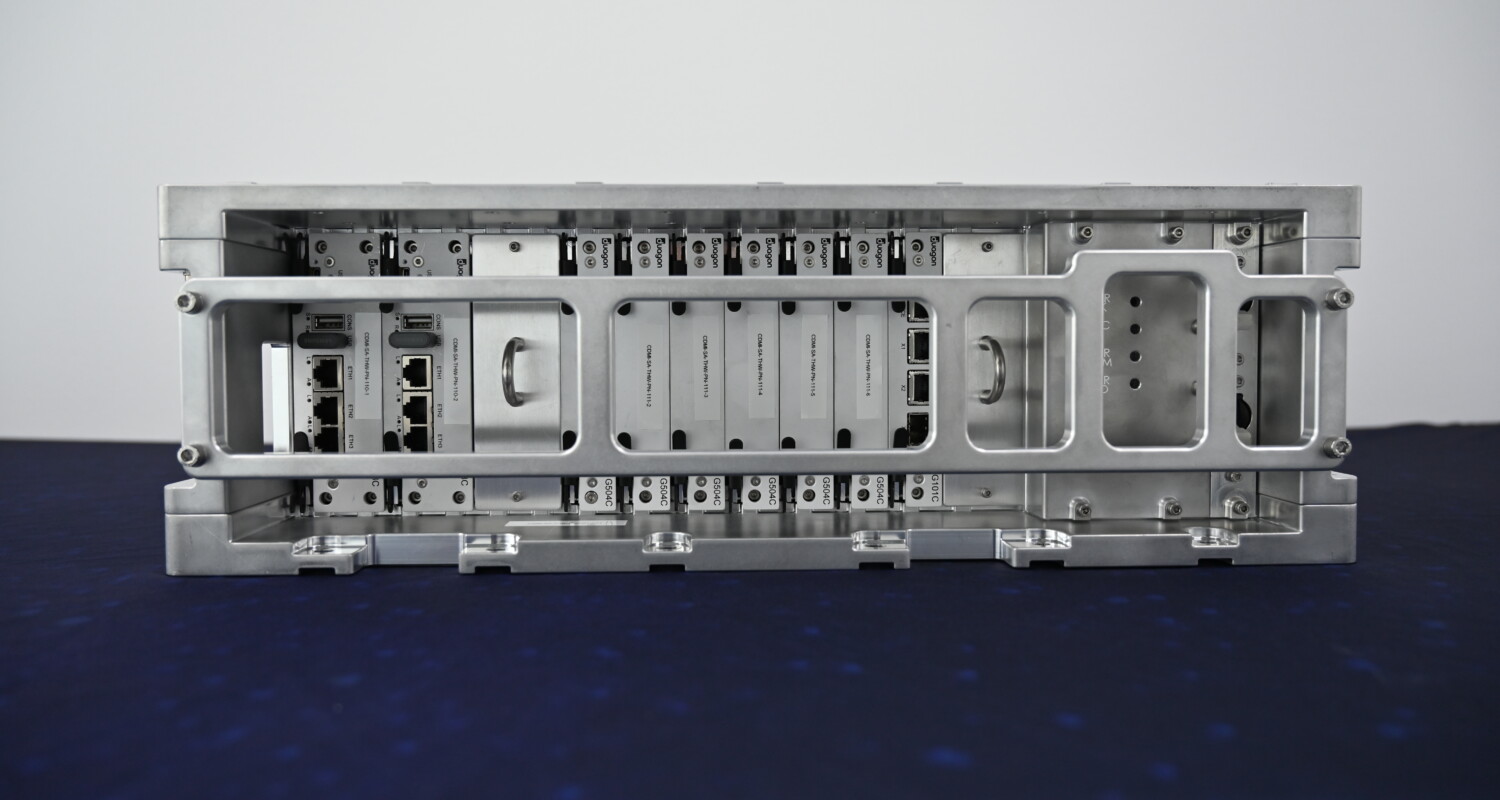
StarEdge has been designed as a next-generation control, data management and processing platform for orbital infrastructures and hosted payloads. Qualified for the ISS internal environment, it combines on-board computing, data storage, virtualisation and IP-based networking into a single, scalable system.
Towards a new generation of Columbus avionics
The successful operation of StarEdge on the ISS demonstrates a modern approach to on-board avionics and data management, aligned with future evolution needs of the Columbus laboratory. By leveraging high-performance, COTS-based computing and virtualisation technologies, StarEdge illustrates how parts of traditional avionics and data handling functions can be consolidated into a flexible, software-defined infrastructure.
This approach opens the door to incremental upgrades, improved maintainability and long-term adaptability, while remaining compatible with the stringent safety and operational constraints of human spaceflight.
A space-based data centre for payloads
StarEdge also acts as an on-orbit data centre, enabling advanced data processing and storage directly in space. Payload data can be processed at the edge, before downlink, reducing latency and optimising the use of limited bandwidth to ground. In many cases, this allows payload teams to achieve performance levels comparable to terrestrial data centres, while operating in orbit.
For the European Space Agency and hosted payload developers, this translates into greater flexibility, faster access to results, and the possibility to deploy more sophisticated software-driven experiments and services on board the ISS.
Enabling future operations in low Earth orbit
With StarEdge now operational in orbit, Space Applications Services further strengthens its contribution to the evolution of ISS payload operations and to future commercial and institutional platforms in low Earth orbit. The successful commissioning confirms the maturity of the technology and its potential to support a new generation of data-intensive space applications.